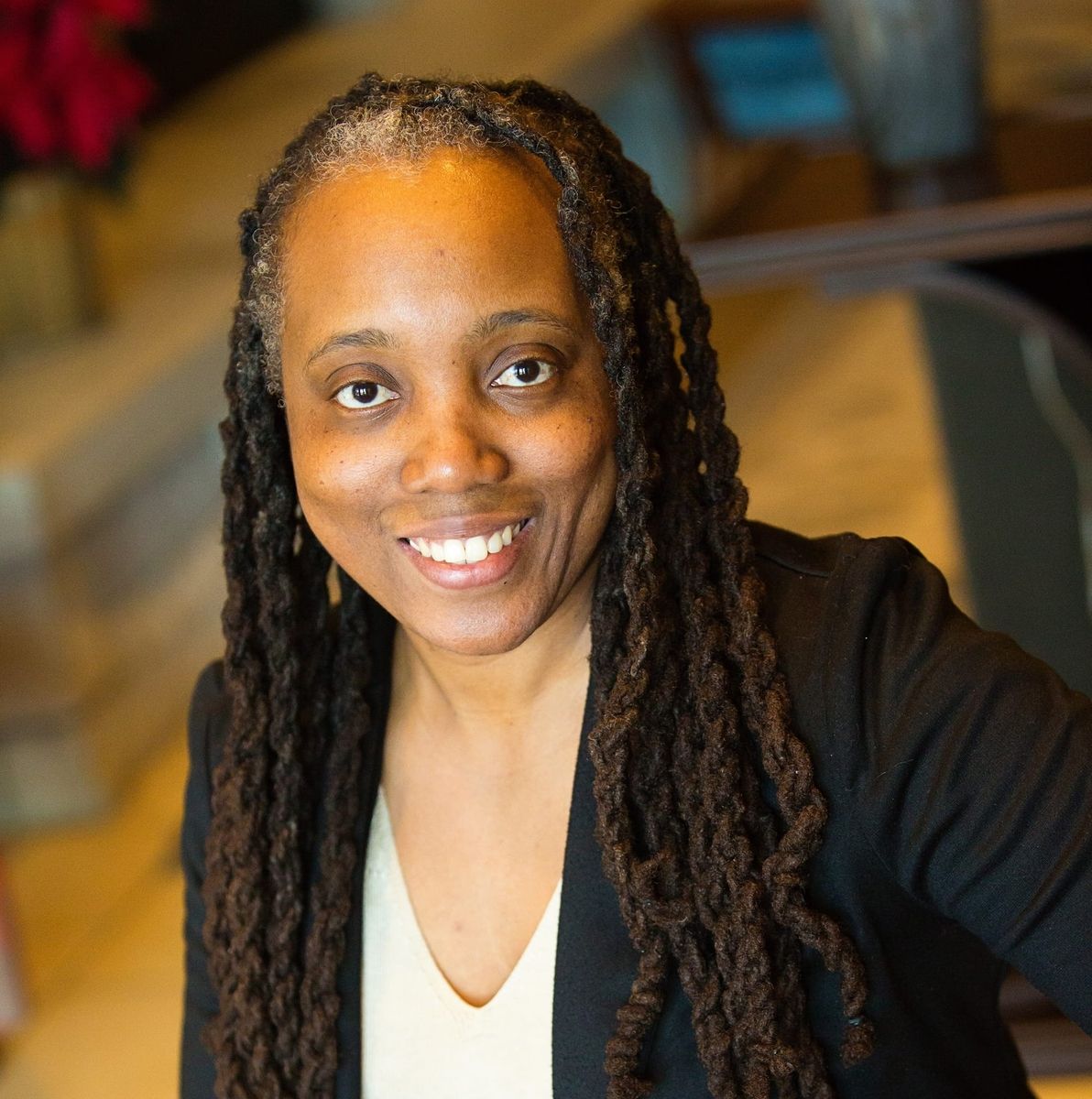

Hi There!
There are few things that can humble a person faster than trying to explain crypto at the family cookout.
Someone asks, "So what is Bitcoin again?", and suddenly the room turns into a live courtroom. One cousin says it is the future of money, another says it is a scam, somebody brings up the guy who lost his password and cannot access millions, then here comes Auntie, who still pays everything with a cheque or cash, looks at everyone and says, "So you want me to put my real money into invisible money?"
Fair question.
The National Cryptocurrency Association, better known as NCA, was built for the people who want to understand crypto but have no idea where to start. I sat down with Ali Tager, NCA's Vice President of External Affairs, at the Bitcoin 2026 conference in Las Vegas to talk about who crypto is actually for, what the data shows, and why most people still feel left out of the conversation.
Our chat changed my approach when I explain crypto to newcomers.
First, let’s get the acronym right.
When most people hear NCA, they think National Cheerleading Association or they assume NCAA. There are no brackets or pom poms.
NCA stands for the National Cryptocurrency Association. It is a U.S.-based nonprofit that was launched in 2025 to help everyday Americans understand and use crypto with confidence.
Ali explained what made starting it urgent:
“Many people have been held back from trying crypto due to the misinformation, negative news that paints everyone in crypto as scammers or fraudsters, the volatility, and FOMO, where people think, 'I missed the boat, it's too late for me'."
She has seen this pattern played out before. She was working with PayPal when they launched their crypto wallet, at a time when almost nobody understood what it was or what it could become. She spent years in AI, watching the same trajectory unfold with deepfakes and large language models (LLMs) that was marked by fear and confusion, until millions people were using tools like ChatGPT without thinking twice about the technology it takes to run them.
"I saw crypto on that same journey, but just a few years behind." ~ Ali Tager, Bitcoin 2026
The numbers are not what most people picture.
According to NCA's 2026 State of Crypto Holders Report, one in four American adults now holds cryptocurrency.
Let me break this down.
NCA partnered with The Harris Poll, a research organization that has been conducting surveys for over 70 years, to randomly contact 40,000 Americans nationwide. Of those 40,000 people, 10,000 said they own crypto, which comes out to exactly one in four. Researchers then applied this ratio to the full U.S. adult population, which sits roughly at 268 million people. One in four of 268 million gives you 67 million crypto holders nationwide.
Think of it like an exit poll on election night. You do not count every single vote to make a reliable projection. Instead, you ask a large, carefully selected group and use their answers to represent the broader population. The larger and more diverse the sample, the more reliable the estimate.
I asked Ali directly about this, because crypto statistics can often be unreliable, and I wanted to understand exactly how solid these numbers were. She explained that in the previous year, the NCA had to survey 55,000 people to find 10,000 holders. This year they only needed 40,000, suggesting that crypto ownership has increased, with holders appearing more frequently in a random sample.
"We're doing the biggest studies with the biggest possible sample size to get to the truest, most accurate picture that is possible." ~ Ali Tager, Bitcoin 2026
In a single year, 12 million more Americans became crypto holders, roughly the combined population of New York City and Los Angeles entering the market in just twelve months.

The picture that emerges shatters the stereotype.
When most people imagine a crypto holder, they picture a young white man in tech in San Francisco or finance in New York. But, the 2026 data tells a different story. More crypto holders are over 55 than under 25. A third of holders are women, and among those who entered the market in the past year, that share rises to 42%.

The workforce breakdown is just as interesting. Construction and manufacturing workers together account for over a fifth of all holders, exceeding the combined share of those in tech and financial services. Income levels also challenge assumptions. The survey showed that more than half of all holders earn less than $150,000 in combined household income, and nearly a quarter earn under $75,000.

In 2026, the typical crypto holder is just as likely to be a construction foreman in Dallas as a software engineer in San Francisco.
"We're here to reject the idea that crypto is not for me." ~Ali Tager
Beyond buying and watching the chart.
The share of holders actively using crypto rose from 80 percent in 2025 to 87 percent in 2026. People are not just buying and waiting. They are using it.
Forty-one percent of holders send crypto to friends and family, up from 31 percent the prior year. Forty percent use crypto to shop and pay for goods and services. Gaming use climbed from 20 to 28 percent. Charitable donations (yes you can tithe in crypto) reached 19 percent. Property tokenization hit 19 percent.

Even more telling, 54 percent of holders say crypto has increased their financial independence. This ranked higher than investment gains, learning, or entertainment value.
"It's not just for investing," Ali told me. "People are sending money to friends and family, they are paying their employees and getting paid, they are spending at the register, and they are donating to nonprofits."
She also noted that about half of large U.S. retailers and chains, including Home Depot, Starbucks, Whole Foods, AMC Theaters, Steak ‘n Shake, already accept crypto at checkout. Most people do not realize this because it is not widely advertised. Ali and many others regularly pay with crypto at their local Whole Foods in Los Angeles, often without the cashier even knowing.
Looking ahead, 90 percent of holders plan to buy more crypto in the next twelve months. Seventy-six percent want their bank to let them buy, hold, and manage crypto alongside their traditional accounts.
When asked what would accelerate their usage, holders pointed to practical factors. They want to earn rewards and interest on their holdings, pay for everyday goods and services more easily, build their knowledge, and see less volatility in the market. These are not the demands of speculators chasing the next big coin. They are the expectations of people who have decided crypto belongs in their financial life and want it to work better.

The real barrier is confusion.
The NCA also surveyed non-holders to understand what was actually keeping people out, and the answer was not what most crypto advocates assume.
It wasn’t dislike of crypto. It wasn’t even primarily fear of volatility, although that did come up. The biggest barrier was feeling overwhelmed.
Ali described NCA's response with a helpful analogy:
"I wake up every day, check the weather app on my phone to know how to dress. I don't have a weather vane. I'm not a meteorologist. I have no idea how the weather gets to my phone. All that matters is that it does." ~ Ali Tager, Bitcoin 2026
Most people do not need to understand cryptography, mining mechanics, or the origins of Satoshi Nakamoto. What they need is a clear understanding of what crypto is, why it matters to people like them, how to use it safely, and how to avoid scams. NCA built its education approach around that sequence.
Their learning tools reflect that philosophy. They include a video podcast called Crypto Explained, a Duolingo-style animated course with short lessons and multiple-choice quizzes, a glossary, and, most interestingly, a free simulator. The simulator allows users to practice buying, selling, and storing crypto without risking real money.
Ali described a common concern they hear from newcomers: “What if I click the wrong button and all my money disappears?” It’s a question that comes up often, so they built the simulator to address exactly that fear.
For someone who did not grow up with digital wallets and QR codes, that kind of hands-on practice can make the difference between curiosity and confidence.

When the bank fails you.
Partway through our conversation, Ali shifted from statistics to something more personal.
"How people are benefiting from crypto is not just financial gains," she said. "What people really value is the control, the privacy, the security, and the accessibility. It’s about the technology itself, not just the money it can make you, but how it gives you more ownership and sovereignty." ~Ali Tager, Bitcoin 2026
She then told me about a woman she had been working with, Karin. When Karin decided to leave her marriage, everything began to unravel.
The shift was immediate and disorienting. Within a week, her car had been sold, their joint bank accounts were emptied, and credit card debt had been taken out in her name without her knowledge. When she went to the bank to deposit cash, she was told she was not on the account and had not been for more than a decade. In a matter of days, the financial ground beneath her disappeared.
Locked out of conventional finance at every turn, Karin turned to crypto; the one asset no one could take from her.
Over time, she had taught herself how to use it, learning late at night and building something of her own beyond his visibility and control. There were no paper statements, no transactions that could be traced, and no records that could easily be found.
"Crypto was a lifeline," Ali said. "It was there for her when traditional systems failed."
Today, Karin is thriving.
This story reframed something for me. The privacy argument around crypto is often dismissed by skeptics who assume anonymity only benefits bad actors. But Karin’s experience is a reminder that financial privacy can also be a form of protection.
"If this tool can save one person from abuse, why would anybody not be for it?" ~ Ali Tager, Bitcoin 2026
We also do not talk enough about the unbanked problem in America. It is easy to assume that being excluded from the financial system is something that happens elsewhere. Stories like Karin’s are a reminder that it happens here too, inside households that appear stable from the outside.
Crypto did not solve everything for her. No tool can. But, it gave her control over her own money, on her own terms, without needing anyone’s permission.
Crypto is also changing how cattle are traded.
Another NCA story that caught my attention involved the use of crypto technology in the cattle ranching industry. Ranchers in Wyoming and Texas are putting RFID (Radio Frequency Identification) tags on their cows' ears, recording every vaccination, pasture move, and breeding record on a blockchain.
💡What is a blockchain?
A blockchain is a shared, unchangeable digital ledger that records transactions across a network of computers. Because copies are stored in multiple locations, no single person or group controls the data.
You can think of a blockchain like a Google Doc shared with millions of people. If someone tries to change a past entry, everyone can see the edit and reject it.
Fraud is a real issue in the ranching industry. A single animal can be sold more than once. Its breed, vaccination history, or treatment can be misrepresented. Once the animal leaves the ranch, there is often no reliable way to verify its history.
NCA has been working with Rob Jennings, a rancher and co-founder of CattleProof Verified, to address this problem. He records each animal’s data , including its birthdate, breed, pasture moves, and vaccinations, on a blockchain ledger. A QR code on the packaging at the grocery store allows shoppers to view the animal's full history right at the meat counter.
"Blockchain is really at the crossroads of the Old West and new tech," Jennings said in an NCA's blog post.
Ali’s point in sharing this story went beyond cattle. We do not talk about electricity itself. We talk about lights, about what the technology enables. The mechanism fades into the background.
"In a few years, crypto isn’t going to be something we talk about as much, because it's just going to be running in the background." ~ Ali Tager, Bitcoin 2026
What this means for beginner investors?
The number most worth sitting with is 67 million, or one in four American adults.
This does not mean everyone needs to rush out and buy crypto. It does mean the time for treating it as a fringe conversation is fading. Crypto holders in 2026 span income levels, industries, regions, and age groups.

Among holders, 83 percent say crypto makes them feel proud, 81 percent say it makes them feel confident, and 78 percent say it makes them feel empowered. Seventy-seven percent report that crypto has had an overall positive impact on their lives, compared with just 3 percent who say it had a negative impact.
The 2026 report found that 82 percent of holders expect the crypto market to grow over the next five years. This is not a prediction anyone should invest on alone. Volatility, scams, and taxes are very real concerns. In fact, 72 percent of holders say they are still worried about scams and security, even as they continue to participate.
The gap between concern and confidence is exactly where education matters most.
Ali's advice for someone still on the sideline:
"Go into crypto with your eyes wide open. Do your research. Verify your sources. No one should ever ask you for your seed phrase."
For my Rhoda Report readers, especially those watching from a distance and wondering whether they missed their chance, you have not. The story is still unfolding. There are, as Ali put it, many boats.
The important question is not which coin to buy. It is whether you understand enough to decide if crypto belongs in your financial life.
Understanding is the first step.

The Rhoda Report spoke with Ali Tager, Vice President of External Affairs at the National Cryptocurrency Association, at the Bitcoin 2026 conference in Las Vegas on April 28, 2026. Statistics cited in this article are drawn from NCA's 2026 State of Crypto Holders Report, conducted with The Harris Poll among 10,000 U.S. crypto holders between February 12 and March 3, 2026, and from NCA's 2026 Crypto Merchant Report. This article is for informational purposes only and does not constitute financial or investment advice. Crypto investments carry risk, including the potential loss of principal.




Disclaimer: This newsletter is strictly educational. The information this report provides does not constitute investment, financial, trading, or any other advice. You should not treat any of the report’s content as such. Please be careful and do your research.
