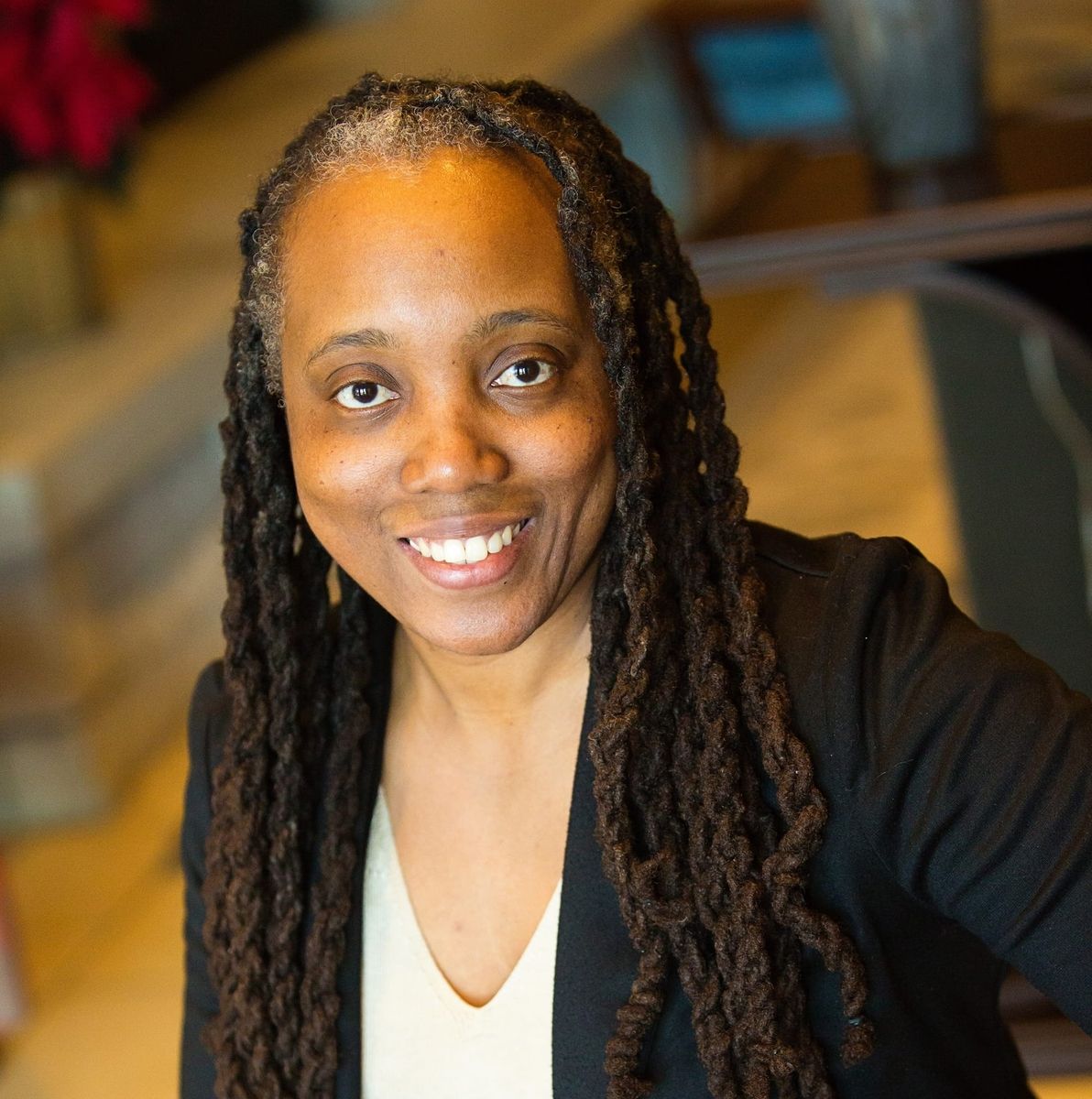

Hi There!
I had no idea who Frank Holmes was until his team accepted my invitation to interview him about HIVE Digital Technologies (TSX.V: HIVE, NASDAQ: HIVE) at Bitcoin 2026.
I originally just wanted to learn more about the company, their approach to Bitcoin mining, and their recent expansion into artificial intelligence (AI) computing infrastructure. However, as I dove into my pre-interview research, I realised that Frank is a global authority on gold, precious metals, royalty companies, and natural resource investing.
He is CEO and CIO of both U.S. Global Investors and HIVE, so what follows is his framework for reading these markets, not a recommendation to buy any specific fund, coin, or stock he is connected to.
Sitting down with him in Las Vegas changed how I now look at market frameworks. If you are tracking daily headlines trying to predict where the market is going, you are likely looking at interest rates, supply metrics, and government policy. Those matter, yes. But, Frank taught me that financial markets also respond to deep cultural forces that spreadsheets cannot capture. Family traditions, national identity, fear, ambition, and the way people imagine their future dictate where money actually flows.
During our conversation, Frank connected dots across chemistry, biology, Indian weddings, Swedish data centers, and the global power grid. He referenced the famous observation by Steve Jobs that we only understand connections when looking backward. When you look back at market history through Frank's lens, you realize that gold, oil, Bitcoin, and AI are not separate, isolated trends. They are chapters of a single human story.
Here is exactly what I learnt from Frank, and how you can use these frameworks the next time you review your investment portfolio.

Rhoda Hall and Frank Holmes at Bitcoin 2026 in Las Vegas.
Gold’s price move on love long before it moves on fear.
If you talk to most Western financial advisors about gold, they will frame it purely as a defensive, panic-driven asset. They may tell you to buy gold because inflation is rising, government debt is climbing, or war has broken out. Frank recognized this dynamic, calling it the "fear trade." What surprised me is that fear only accounts for a minority of global gold demand. Frank's own research puts it at 60% love, 40% fear, what he calls the "love trade."
The love trade dominates major consuming regions across India, China, and the Middle East. In these cultures, gold is woven into weddings, religious celebrations, and family duties. The World Gold Council reported that weddings generate roughly half of India's annual gold demand. A gold necklace given to a bride represents parental savings and an asset she controls on her own during emergencies. Owners frequently sell older gold to buy new jewelry when prices rise, so the gold keeps moving through the economy instead of sitting still.
Short term is the fear trade, but long term is the love trade.
— Frank Holmes (Bitcoin 2026)
Tip #1:
Understanding the love trade means recognizing that rising incomes across Asia support a demand floor for gold that isn't likely to disappear soon. It serves an economic purpose during crises and a cultural purpose during peace.
Oil prices reflect the way we live.
We usually look at oil through the lens of supply barrels, production quotas, and refinery capacity. Frank showed me that oil demand is really a reflection of lifestyle culture.
Consider the physical layout of our communities. Suburbs mean private cars and long commutes. This choice locks in energy demand that cities with strong public transit systems don't have. In fact, road transportation generates roughly 45% of global oil demand.
Geopolitics exposes the emotional layer of energy pricing. Frank pointed to the sharp rise in energy prices following Russia's invasion of Ukraine. Prices moved on fear and negative sentiment before any real shortage showed up in the supply chain.
Tip #2:
When looking at energy stocks or commodity exposure, pay attention to past seasonal gas price swings. Ask whether developing economies are adopting car-heavy, energy-intensive lifestyles like ours, not just whether prices ticked up this month. Lifestyle choices set the baseline demand, and that baseline is what shapes long-term prices. In other words, look beyond the gas pump.
Bitcoin grew out of digital culture.
Frank's shift from physical gold to digital mining started with the following question:
How would a younger generation seek independence and protect wealth through digital technology?
He researched the asset class back in 2016, recognizing similar patterns between physical mining and digital ledger verification. Gold mining produces a scarce tangible asset. Bitcoin mining produces a scarce digital one.
Bitcoin emerged from online communities, gaming culture, and skepticism toward centralized banking systems. Frank observed children using gaming computers to mine digital assets while their parents slept. Traditional finance excluded those young people through age restrictions on brokerage accounts. Crypto networks allowed immediate participation.
The new Viagra of Wall Street is volatility.
— Frank Holmes (Bitcoin 2026)
Frank compared Bitcoin to M-Pesa, the mobile payment network in Kenya that let people who couldn't get a bank account move money over their phones, drawing millions into the formal economy. Bitcoin scales that same idea globally. The asset divides into small units called satoshis, so participants can begin investing with just a single dollar.
We're witnessing something that's not in our world, that people know when governments may have bad government policies, we have to protect our wealth.
— Frank Holmes (Bitcoin 2026)
Tip #3:
If you or someone you know are skeptical about digital assets because you cannot touch them, look at the generational shift underneath that skepticism. Younger investors trust decentralized networks the way older generations trust physical gold bars. Frank's own approach to the volatility isn't all-or-nothing. He treats Bitcoin the way he treats gold, something around 10% of a portfolio, rebalanced once a year, the same discipline Ray Dalio has used with gold for decades (5-15% in Gold).
The realities of AI.
AI has grown from a technical field into something people are building an identity around. A technology becomes a real investment theme once it changes what people expect from an ordinary workday.
Frank approached AI through the physical infrastructure required for digital assets. Bitcoin mining uses application-specific integrated circuits, or ASICs, optimized for a single task. Ethereum mining, on the other hand, relied on more versatile graphics processing units, or GPUs. HIVE used these advanced chips, which let the company pivot its hardware toward AI computing once blockchain protocols changed. Both industries need land, specialized chips, heavy electrical capacity, and grid access.
What's the IQ per megawatt in the AI business?
— Frank Holmes (Bitcoin 2026)
AI data centers cost far more to build than basic Bitcoin mining facilities, mostly because of cooling requirements and chip costs. Corporate demand reflects that shift. Nvidia reported a 65% revenue increase to $215.9 billion in fiscal year 2026, driven largely by infrastructure deployment. Frank pointed out the human side of this too, including AI-assisted diagnostics that can flag cancer markers years before symptoms appear.
Speculative enthusiasm can push valuations beyond economic reality. AI companies face power constraints, regulatory scrutiny, and rising construction costs. Frank warned that major technological shifts produce extreme volatility, with exponential growth often followed by sharp corrections.
All big money is made exponentially, and all big losses is a square root.
— Frank Holmes (Bitcoin 2026)
Tip #4:
Before you buy an AI-themed stock or fund because the name is everywhere, research where the company actually sits in the AI supply chain. Chipmakers, data center owners, and companies just adding "AI" to a press release are three very different levels of risk. The safer entry points are often the companies with infrastructure already in place, like land and electricity access, rather than the flashiest name in the headlines.
Bring curiosity to your next financial review.
Frank's most practical investment lesson had nothing to do with a specific ticker. He told me the real key to navigating these shifts is staying curious, the way a child stays curious about everything around him/her.
When you sit down with your finances, bring that same curiosity to the table. Don't just look at historical price charts or the numbers or the profit/loss. Ask why your money is moving.
Gold reflects the enduring human desire to preserve wealth and protect what you have during uncertain times.
Oil reflects how societies build their cities and protect their national priorities.
Bitcoin reflects the values of a digital generation seeking independence.
AI reflects our desire to extend what we're capable of and get more done with less time.
Review your asset allocation to make sure you understand how these forces show up in it. Use Frank's framework to look at your investments through a wider lens. When you understand the cultural stories driving these sectors, you gain a real edge. You can spot the shifts happening in households, workplaces, and online networks long before Wall Street's metrics catch up to them.
If you do noting else this week
Open your investment portfolio and check one thing.
How much of it touches gold, Bitcoin, or AI, and can you say why that number is what it is?
If you cannot answer that in a sentence, that is a good starting point, not a reason to panic.
Food for thought
Culture moves before charts do. That is the whole lesson.
You do not need a finance degree to notice it. You just need to watch what the people around you are actually doing with their money, and why.
We are going to keep connecting these dots together, one issue at a time.
~ Rhoda
Know someone who thinks gold, Bitcoin, or AI stocks are too complicated to touch? Share this with them.
The Rhoda Report spoke with Frank Holmes, CEO and Chief Investment Officer of U.S. Global Investors and HIVE Digital Technologies, at the Bitcoin 2026 conference in Las Vegas on April 28, 2026. Statistics cited in this article are drawn from the World Gold Council's research on gold demand in India, the International Energy Agency's reporting on global oil demand by sector, and NVIDIA's fiscal year 2026 financial results. This article is for informational purposes only and does not constitute financial or investment advice. Investments in gold, oil, Bitcoin, and AI-related assets carry risk, including the potential loss of principal.




Disclaimer: This newsletter is strictly educational. The information this report provides does not constitute investment, financial, trading, or any other advice. You should not treat any of the report’s content as such. Please be careful and do your research.
